Wednesday, January 14, 2026

Favorite quotes of 2025

This year, before I give you my rundown of best books read in 2025, I give you my favorite quotes in no particular order. These are just a sample. Some books I could have picked a favorite quote every couple of pages. Some you understand immediately and some might only become meaningful in context. But thus is the nature of writing.

 "Isla snorts, puts her hand to he mouth as if to prevent something falling out, worries it might be her heart and swallows." 
- Private Rites, Julia Armfield

"The hypothetical functions of my design are endless - if the community of plants and fungi can operate its trellis frame, will it be able to walk? If its light-sensitive elements become sophisticated enough, will it be able to see? And grasp with fingers and sense the weather, and know the world and sing its beauties?"
- A Botanical Daughter, Noah Medlock

"Right on cue, Aza chimes in, her words and teasing tone as predictable and familiar as Torah trope. Truning this whole exercise - rain, complaints, scibbled words, the sculptures' open mouths, the half-seen deer and ghost-echoes of her father - back into a recitation. Commemorative ritual. So much more satisfying than visiting a grave. Her family's version of the Mourner's Kaddish. Of We miss you, Dad. Whoever you were."
- Dry and Ready, Glen Hirshberg in Christmas and Other Horrors

"Such things wrestles inside the girl. She wanted to take the soft flesh in her mouth and bite it to blood; she wanted to strike the hand from the wrist with her dagger and guard it as a relic in her bodice for eternity."
- Matrix, Lauren Groff

"Those like us were not meant to be kind. We were born to rage and burn and destroy all that must be destroyed, so that maybe one day, much better people than us can live in a world where they're rewarded for their kindness instead of having it twisted to bind them."
- Heavenly Tyrant, Xiran Jay Zhao

"When I remember this moment, I remember the thrum of the blades, though I know I couldn't possibly have heard them. I guess that much light looks so loud, you're surprised to find it doesn't produce any sound."
- The Morningside, Tèa Obreht

"How could a place be a dream? (Did we live up to their dreams? we wonder uneasy.) Understand that we will never fully comprehend their dreams having come of age in this Promised Land.
Understand: We are their Promised Land."
- Brown Girls, Daphne Palasi Andreades

"Whatever it was, he couldn't stay there surrounded by a passel of slaves whose silence made him imagine an avalanche seen from a great distance."
- A Mercy, Toni Morrison

"The meaning of life is still, as it was, simply other people."
- A Beautifully Foolish Endeavor, Hank Green 


Streaming, TV, and the Death of Episode Arcs

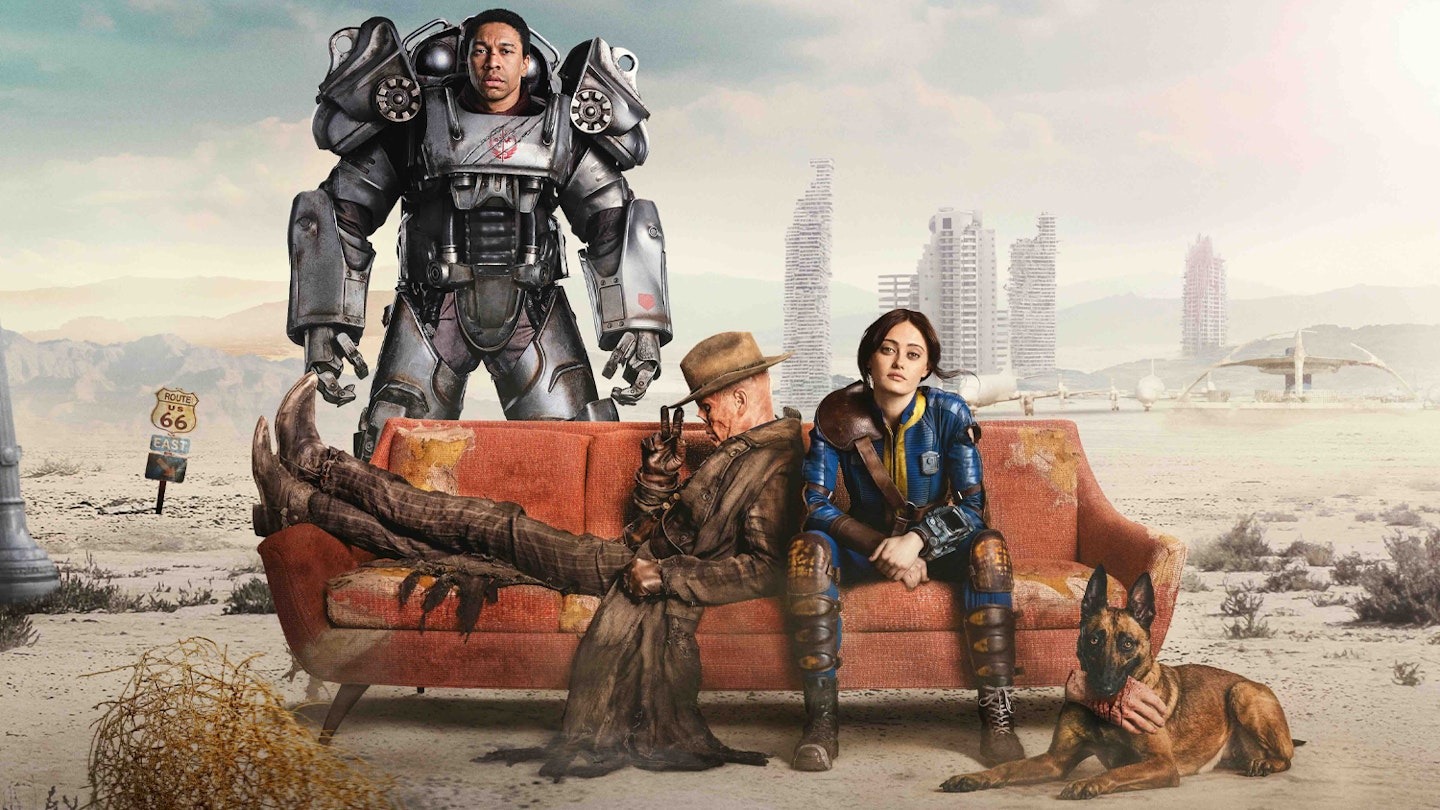
So, I'm watching the new season of Fallout and every episode I find myself routinely checking the time wondering how much longer the episode is going to be. It's not really that I find the show boring, I am entertained, I like to see where all of this is going. And still. The episode seems to drag. 


This is not a new feeling for me. I remember it most strongly back when I watched season 2 of Stranger Things. I didn't even dislike what I was seeing but every episode seemed to go on forever and I had to push through so much that I stopped watching the show altogether after the season finale. 

Now that I took active notice of that phenomenon, I remember that I had that same impression with multiple if not most made-for-streaming narrative shows I have recently watched or am currently watching. And now that I know it was happening I could feel out the why of it all. 

Let's get one thing out of the way first. Personally, I believe that letting the episodes just get longer and longer in general is an issue, in the same way it is true for movies. Time constraints force screenwriters and directors to decide what is necessary and makes, in most cases, for a better product. I'm not saying that episodes - or movies for that matter - should never be long, but you should have something to show for it, you know? (An excellent example is The Bear's Fishes, an episode that's over twice as long as the regular episodes. It's tense and dynamic all the way through. A masterclass of an event episode.)

However, that's not the only issue. And to me, it is not the main issue. More than the actual length increase, what makes these episodes feel longer is, to me, the almost utter lack of narrative arcs. No emotional arc, no thematic arc, no relationship or character arc. These episodes are just an accumulation of scenes until they are cut off at a seemingly random moment in time. You could've let the episode end a scene earlier or a scene later and it wouldn't have made a difference. 

I've floated the idea that maybe this is because these shows are meant to be binged, so it wouldn't matter that the collection of scenes that they call an episode aren't bundled into coherent chunks, but Fallout is released on a weekly schedule, so that's not it.  

My knowledge of the industry is not advanced enough that I could divine a reasoning beyond speculation but what I can talk about is the effect. 

If the scenes comprising an episode aren't following an arc, I am constantly waiting for something to happen. For the episode to go through the build-up climax denouement (or similar) stages but it never does and I end up waiting in vain. Sure, there'll be an action set piece in between or an emotional moment but it won't lead to anything, at least not in this episode. This is especially grueling when the show switches perspectives (this, too, often randomly). Fallout will show you an exciting or interesting scene and then take out all its momentum by then having you watch Hank MacLean blow up some mice. I know, I'm ragging on the show here but it is by far not the only offender, just the one where I noticed it most recently. 

Even when you tell a continuous story that has arcs that span the whole season and possibly the whole run, you can still have smaller arcs every episode that make them feel tighter, more coherent, and just better. I know it's possible because I've seen it work. Game of Thrones (in earlier seasons) had arcs in its episodes. Sense8 with its 8 story lines and season-spanning narratives managed to connect these in emotional or thematic arcs within each episode. I sit down and rewatch single episodes of these shows sometimes because they are a satisfying experience by themselves. And there are many shows where I cannot imagine doing that.  

Wednesday, November 5, 2025

A rundown of horror movies of 2025: Sinners

While I’ve had to think about the order of movies 4-2, this one is unquestionably at the top. Not just my favorite horror movie of the year or even my favorite movie of the year but one of my favorite movies of the last couple of years if not this decade generally. When I first saw the trailer, I was already hooked. Then I heard and read good reviews and so I went into it with the highest expectations. I was still blown away. What a movie.

Sinners 


In 1932 twin brothers Smoke and Stack (both Michael B. Jordan) return home to Mississippi to open a juke joint with money stolen from Chicago gangsters and the help of people of the local community, most notably their younger cousin Sammie (Miles Caton), a blues singer. Their times of strife are far from over, as a sinister enemy rallies in the night.


Spoilers from here on out


The trailer alone is remarkable. Tense. Deeply atmospheric. This one, the first one, doesn’t even show the monster. It doesn’t tell us that it’s vampires. That’s not necessary to completely and utterly pull you in. And in contrast to 28 Years Later, this movie lives up to its trailer’s promise.

Sinners is a celebration of Black music and art. It is a caution against assimilation and its mechanisms. It is beautifully shot and wonderfully acted. Its themes are relevant and communicated clearly. There’s so much in it that’s worth discussing, so be aware that I will only scrape the surface here. (Go check out especially Black creators because there’s some stuff I, as a white European, just cannot get fully.)

Despite Smoke and Stack being front and center in the trailer and poster, one could very well argue that Sammie is the true protagonist. The movie begins and ends with him and it is his gift for music that plays a fundamental role. His music is the blues, which he pursues against his preacher father’s wishes. The blues is - in contrast to Christianity - a connection to his African forebears. It wasn’t impressed on him by the colonizing force and where Christianity is a tool of assimilation, the blues is a tool of community and self-expression, of celebrating your culture. Sammie’s gift isn’t just that he plays and sings very well - and will thus entice people to the juke joint when he performs - his gift transcends time and place and calls forth ancestors and descendants alike in one of the most gorgeous scenes I can ever remember seeing in the theater. Still today, when I watch the video I get goosebumps.

His music, however, does not only call out into time but also to a vampire in search of a culture he lost. Remmick (Jack O’Connell) is Irish, a people notable for their colonization by England and discrimination in the US. It’s not an accident that the house he finds refuge in after being pursued by Choctaw hunters (another great detail, as the Choctaw and the Irish are generally historical allies) belongs to a KKK couple. He uses an American accent with them and immediately builds an ‘us’ - white people - vs ‘them’ - the others - narrative to save his skin. As a vampire he has power but he no longer has a connection to his distinct culture. So when he hears Sammie sing, he recognizes his gift for what it is and wants it for himself to replace what he has lost (‘I want your stories. I want your songs. And you gon’ have mine.’). He pretends to be on our protagonists’ side, warning them about an impending KKK attack in the morning, empathizing with their struggle, stressing that he understands, but while his words ring true, his actions reveal his insidious goals. For one, he’s not giving anyone a choice here, he threatens, he stalks the night, he turns people violently and against their will. Furthermore, what he offers isn’t truly community, despite what he might claim. Remmick has everyone sing and dance with him, sing an Irish song, dance an Irish jig, even though he is the only Irish person there. As the quotes illustrate, he wants to take what Sammie has and make it his own, something that reflects how so much pop culture and music originated with Black people and was adapted by the dominant culture without giving credit or appreciation to its roots.

Delta Slim (Delroy Lindo), another blues musician in the movie, says pointedly ‘see, white folks, they like the blues just fine. They just don't like the people who make it’. Which is still true today about too many things.

In the end, it is the blues - represented by the guitar - that saves Sammie as the Lord’s prayer is simply echoed by Remmick (Christianity again as a vehicle for colonization and separating Remmick, too, from his culture) and it is the blues to which he’ll dedicate his life. Because while assimilating - here, turning into a vampire - may grant you boons - Stack as a vampire, for example, is still around decades later and seemingly fine - it can never set you free.

Before I close out. I would be remiss if I didn’t mention Wunmi Mosaku, whose character Annie, is such an important figure. As a Hoodoo practitioner, she is a counterweight to the assimilating force of Christianity and presents continuity and community. Her relationship with Smoke is an emotional throughline that made me cry.


Add-On: Watch this talk from fantastic youtuber F.D. Signifier about Sinners and its place in the entertainment industry: "The Hidden Truth Behind Sinners"

Thursday, October 30, 2025

Wolf Man Addendum: Wikipedia and interpretive authority

The beauty about fiction is that all our experiences are different. Our life influences how we view and interpret a piece of media and it can be so joyful to discuss these interpretations. 

Sometimes when I go to Wikipedia to check something about a movie or a book, I will be confronted with an interpretation that is quite different than mine. And that's generally not an issue. Despite what I might joke about from time to time, I do not actually believe my opinions are the only correct ones. However, because these interpretations on Wikipedia usually aren't presented as such and are instead, for example, part of the plot synopsis on the same site that lists facts about the movie like its director or year of release, that makes it seem like a fact as well. 

 For example: In the plot summary of Wolf Man (2025) it says "like his now-estranged father, he [Blake] struggles to control his temper when he senses Ginger is in trouble", which makes it sound like he has anger issues that are in line with his own father. Especially considering the next part of the sentence talks about his wife's growing sense of alienation from her family, a problem that marks her character throughout the movie. I viewed - and therefore described to you - the scene with his daughter differently. Yes, it parallels Blake and his daughter with earlier scenes of Blake and his father but - in my opinion - not to show how they are similar but instead how they are different. Instead of treating her harshly in general, Blake just yells out when he thinks she might get hurt. As is reasonable I think. And instead of more anger and blame, he is the one to apologize to her and get on her level to explain. To me, this is an early sign of how Blake managed to break the cycle and not how he is like his father. 

Maybe this seems nitpicky to you - and admittedly, it isn't that important in this instance - but it is just the most recent example of a phenomenon I've come across many times in the past. 

And sure, I, too, don't constantly add "in my opinion" or "I believe" to sentences I write but on personal blogs you can expect the audience to understand that. People don't go to Wikipedia for opinions. 

 I feel similar about some of those "XY ending explained" videos or articles. Because while they sometimes do just explain references or symbols or similar you might have missed, sometimes they do in fact present and interpretation of a purposefully ambiguous ending as the one true and correct one. 

All in all, it is not a major problem in the grand scheme of things, especially considering the stresses fiction is under, but I want to remind everybody that while some interpretations might be more valid than others (and some interpretations are plain wrong), just because it's written down on Wikipedia or presented by a YouTuber as the truth doesn't mean it isn't merely one of many interpretations. 

Tuesday, October 28, 2025

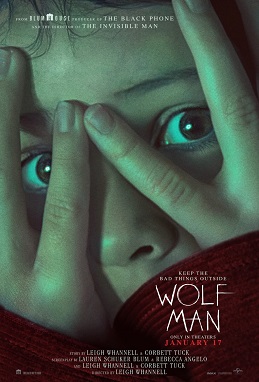
A rundown of horror movies of 2025: Wolf Man

A friend found this movie for us and we ended up all going together. I wasn’t sold on the trailer and went mostly for the friend hang-out, but this movie positively surprised me so much that it became my second favorite horror movie of the year so far. 

Wolf Man (2025)

A young boy grows up with his father in the woods. The father is strict and violent and claims to be so to protect his son from what is hiding in the forest. When decades later the estranged father is declared dead, the son, who now has a daughter and a slightly struggling marriage, and his family revisit his childhood home and get confronted with his childhood curse.

Spoilers from here on out

I like it when movies have a theme and stick to it. My favorite horror uses the horrific happenstances, the monster out to get you, as allegory for something else. To say it with tumblr user valtsv’s words “the symbolism is Real and Trying to Kill You”.

The symbolism here is generational trauma. Because it turns out, the werewolf menacing the son and his family is not what was waiting in the woods for him as a child but his own father; his father who now in turn infects him with the werewolf curse.

Watching the trailer it was already clear that the husband, Blake, would be turning into a werewolf during the course of the movie and it looked like the mother, Charlotte, and daughter, Ginger, would have to defend against him as well. I was pleasantly surprised when that did not turn out to be the case. While the transformation is unsettling both for mother and daughter as well as for Blake himself - made visible and tangible for the audience with distorted vision and him gradually losing the ability to parse speech - he is never a danger to them, even when they fear it. In fact, he protects them from his father and in the end chooses death over harming anyone else and passing the curse on, and thus breaking the cycle. 

The beauty of this is that you could already see Blake’s refusal to pass on the metaphorical family curse when early on the daughter behaves thoughtlessly and almost gets hurt. His own father treated him like a soldier and here he raises his voice at his daughter in alarm. But instead of justifying his actions and doubling down as his own father would have, Blake promptly apologizes for it, gently explains why her behavior was dangerous and reaffirms his love for her.

The movie is straight-forward in its plot and theming and contains emotional moments like the repeated ritual Blake has with his daughter that shows their love for each other. It is wonderfully self-contained creature transformation horror and makes me very glad for the scrapping of Universal’s “Dark Universe” without which it never would have existed.


Thursday, October 23, 2025

A rundown of horror movies of 2025: Nosferatu

This one was infamous before it was even out. The movie’s reputation preceded it and as a lover of vampires, clearly I had to make this one a field day.

Nosferatu (2024)


Newlywed Thomas is called to Transylvania to assist reclusive Count Orlok with a real estate deal. Against the warnings of his wife Ellen whose nightmares make her cautious, he goes. The horror he experiences there will end up following him home.

Spoilers

Nosferatu (2024) is a fantastic movie. Everyone acts their heart out and the lighting and cinematography are really something else. I found the sequences in Transylvania especially chilling. It’s all just so well made.

A young Ellen feels lonely and abandoned and calls out into the night for someone, anyone, and someone answers. Later she is in a relationship society expects from her but there is something standing between her and her husband, between them and marital happiness. That something is at once a repressive society as well as Ellen’s traumatic adolescent experiences. The relationship between Ellen and Count Orlok is sexually liberating in the same way it is obsessively predatory. The movie asks us to hold both of these ideas in our head even if it makes us uncomfortable, especially if it makes us uncomfortable.

Gothic fiction has us sit with discomfort and instinctive disgust and rejects a black and white interpretation. And judging by pearl-clutching reviews the movie succeeded in that beautifully.

I feel like I have to justify putting it at 3, because in many technical aspects it is better than the movie I put at 2. It’s just Nosferatu is a story I’m familiar with and while this movie was certainly worth making in my opinion, because it brought with it new perspectives, it didn’t surprise me so much; possibly also because I’d already heard many good things about it before I watched it. I was told it was excellent and it is. Expectations met.

Tuesday, October 14, 2025

A rundown of horror movies of 2025: Companion

 
I watched this one on Valentine’s day with a good friend. It is sorted under “science fiction thriller” or “dark comedy” more often than “horror”, and maybe that means I shouldn’t include it here. Genre is fluid, however, and mutable and to me the movie’s terror is central to the story.


Companion

Happy couple Iris and Josh join friends of his for a getaway in a remote villa in a sprawling forest. The cheerful if a little awkward atmosphere devolves into chaos after the death of one of them reveals secrets kept.


Spoilers from here on out


As the second trailer reveals, Iris is a robot Josh has purchased to be his girlfriend. She is unaware of this fact and believes both herself and her relationship with Josh to be real. It becomes clear very fast that Josh does not consider her real. He plans to have her kill a man and rob his house and ultimately blame it on faulty code within her.

Iris wakes up. Iris escapes. Iris fights for her life.

The movie can easily be read as an allegory for abusive relationships. Iris is there for Josh’s entertainment and enjoyment, is literally and legally an object. Sophie Thatcher does this great thing where her expression is empty whenever she isn’t actively smiling at him, which shows beautifully how she only exists in relation to what he wants from her.

When Josh set the parameters for her character and abilities, he set the slider for intelligence all the way down, showcasing how insecure he is and how much he doesn’t want her to be a partner. Later when Iris has control over her sliders and slides it to the top, she’s not even genius-level smart, just college educated, but he couldn’t even stand that.

After everything he did, Josh makes her sit at the table, unable to respond or move, forces her to light her hand on fire, and makes her listen to all his grievances. Ending with ‘you don’t know how hard it is for people like me’. (A line that made me say ‘says the conventionally attractive white guy’ out loud in the theater; but that’s the point, right?)

When she confronts Josh in the end, it is to tell him that he no longer controls her (a mechanic from the company removed the part of the code that makes her do what others say). She kills him in a way that is satisfyingly brutal; automatic bottle opener to the temple.

Josh’s whole attitude towards her is just the endpoint of how dismissive he is of those around him in general (dragging an unwitting friend into it, planning a murder in the first place). He is portrayed as self-centered and overestimates his abilities to such a degree that he doesn’t consider the consequences of his actions and thus gets everyone killed. Iris, on the other hand, starts out with manipulated memories and (programmed) rose-tinted glasses that get rudely ripped off her. During the movie she struggles with the realization that Josh never actually loved her, just what she could do/be for him. Only when she accepts that Josh could never see her as a person and would only ever continue to treat her the way he did, can she break away.

The world might be dangerous for her, but that doesn't matter, because she is free.


Thursday, October 2, 2025

A rundown of horror movies of 2025: 28 Years Later


Apparently this blog mostly gets used for seasonal posting. This year Halloween I will present to you a rundown of the horror movies I’ve watched in the theater so far this year. It’s been a glorious horror year and more’s to come. Let’s review!

Starting with my least favorite.

28 Years Later


28 years after the outbreak of a rage virus that turns humans into mindlessly aggressive beings, the UK is quarantined off from the world (a fact that leads to some hilarious moments with a stranded Swedish soldier). 12-year-old Spike grows up in this environment on an island connected to the mainland by a causeway only accessible during low tide. When his mother grows ever sicker and the relationship with his father strained, he decides to brave the mainland and its unknown dangers in order to find help for her. What he does find is more than he could’ve imagined.


Spoilers from here on out


This movie was a major letdown for me. Possibly because the trailer was so fantastic and promised atmospheric and deeply unsettling horror. Both my friend and I were unsure if the movie wouldn’t be too scary for us and both of us sat in the theater afterwards asking ourselves “that’s it?”. There’s many things to be said about this movie, but for brevity’s sake, let me summarize my thoughts compliment-sandwich-style where I start with something I like about the movie before I mention something I dislike, and so on before I end on something I like.

  • Maybe it’s cheating to mention the trailer, but I’ve come back to it since and I still really like it. Having a recording of Rudyard Kipling’s poem Boots play over eerie visuals was an inspired choice. Despite the disappointment of the movie the trailer hasn’t been ruined for me.
  • The last couple of minutes, when a gang of tracksuit-wearing weirdos gleefully kill the infected in a stylized action-comedy routine, came so out of left field and fully took me out. The rest of the movie is mostly somber and serious and this is something else entirely. I’ve since learned that this movie is just the start of the trilogy and these people will become more relevant in future installments but that knowledge doesn’t make their appearance feel any less disjointed for this movie.
  • Alfie Williams, the actor playing Spike does a great job with what he’s got. He’s fully believable on screen, keeps the movie as together as possible and holds his own against seasoned actors. Good on him.
  • On at least three separate occasions we see the "alpha" infected pull a spine out of a body by the head. By the third time it happens, you are fully desensitized to it. The whole gruesome display would’ve had more impact if we’d just seen the result before we see it happen once. I know this is probably the least issue with the movie but it bothered me because it was such an unnecessary waste of horrific imagery. 
  • The bone temple is such an exquisitely macabre set piece. That doesn’t change when we find out that it is made not with ill intent but love and care for the dead as a funeral monument. Instead it becomes eerily beautiful. I enjoyed the subversion of expectation here, that something that looks so ominous is actually positive.  
  • The fact that there are "alpha" infected now, for whom the virus acts like steroids making them stronger and bigger (their dicks too!) and giving them power over birds??? Seemingly?? Sorry, that’s just stupid. Stuff like that fits in with comedic movies like Army of the Dead but you want us to take this one seriously, right? Right??
  • Big fan of how the community Spike is from is more than a little cultish with their training the kids to become killers and revering of killing and adherence to specific rules. I like how it first seems calm and homely to Spike but once he’s been to the mainland and comes back, it starts to unravel. Wish they would’ve done more with that.
  • I understand that there’s a plan behind this. I get that Danny Boyle, the director, and Alex Garland, the writer, didn’t just throw stuff at the wall in the hopes something would stick. And still it felt like that to me. There’s references to this and that, violence and isolationism and trauma and coming-of-age and religion and Jimmy Savile of all things. Some of it worked, and some of it didn’t but the bigger problem, in my opinion, is that the whole movie lacks cohesion and ends up being somewhat of a nothing burger with at times wonderful moments.
  • Aaron Taylor-Johnson was there. I always like seeing him in movies.

Friday, June 20, 2025

In lieu of starting online fights: Not everything that has rich people in it is Sucession

 Hey now, has this ever happened to you? You are innocently scrolling social media, looking at memes, cute animal videos and the occasional comment on some of your favorite media, when suddenly an opinion crosses your feed that's so unbelievably wrong it seems the OP is posting from a parallel universe. Because surely, surely, if you had both watched the same movie/show, surely, they could not have reached a conclusion this eccentric. It itches in your fingers, you start typing up a reply, you simply have to set the record straight. But then you remember. Starting fights online is generally a huge waste of everyone's time and efforts. People aren't likely to try and see things your way, no matter how clearly and persuasively you explain. The most probable outcome is just huge amounts of frustration on your part. It's simply not worth it. Especially over something as ultimately inconsequential as a media opinion. And still. OP was so wrong on the internet. You cannot let that go unremarked. So what are you to do?

Mostly, I just rant to a friend. We commiserate and pick apart why exactly the opinion was bad and then we congratulate each other on being the only ones with correct ideas. But I realized that I have this blog and I don't utilize it nearly as much as I want to. Thus, without further ado, I'm starting a series where I elaborate on opinions I read on the internet that I heavily disagree with. 

Disclaimer: Obviously, obviously, I do not think I have the correct opinions. These are, after all, opinions still. I do believe the statements I will be discussing here to be based at least partially on flawed logic or a misunderstanding of the media, but that doesn't mean I'm right all the time or even about these. Just in case the irony wasn't clear.

No. 1: Not everything that has rich people in it is Succession

The first statement I will be discussing is the following: "The Gentlemen [the show] is Succession if it was bad".

This is fascinating to me, because it would have never occurred to me to compare these two shows whatsoever. 

Now, I've watched and liked both shows. And I agree, Succession is the better show by many metrics. So, I understand if OP didn't like The Gentlemen. You can see Guy Ritchie's signature style of storytelling everywhere (even if the show has more than one female character and less homoeroticism than his movies usually have). That's not for everybody. But it makes absolutely no sense, in my opinion, to compare these shows in this way.

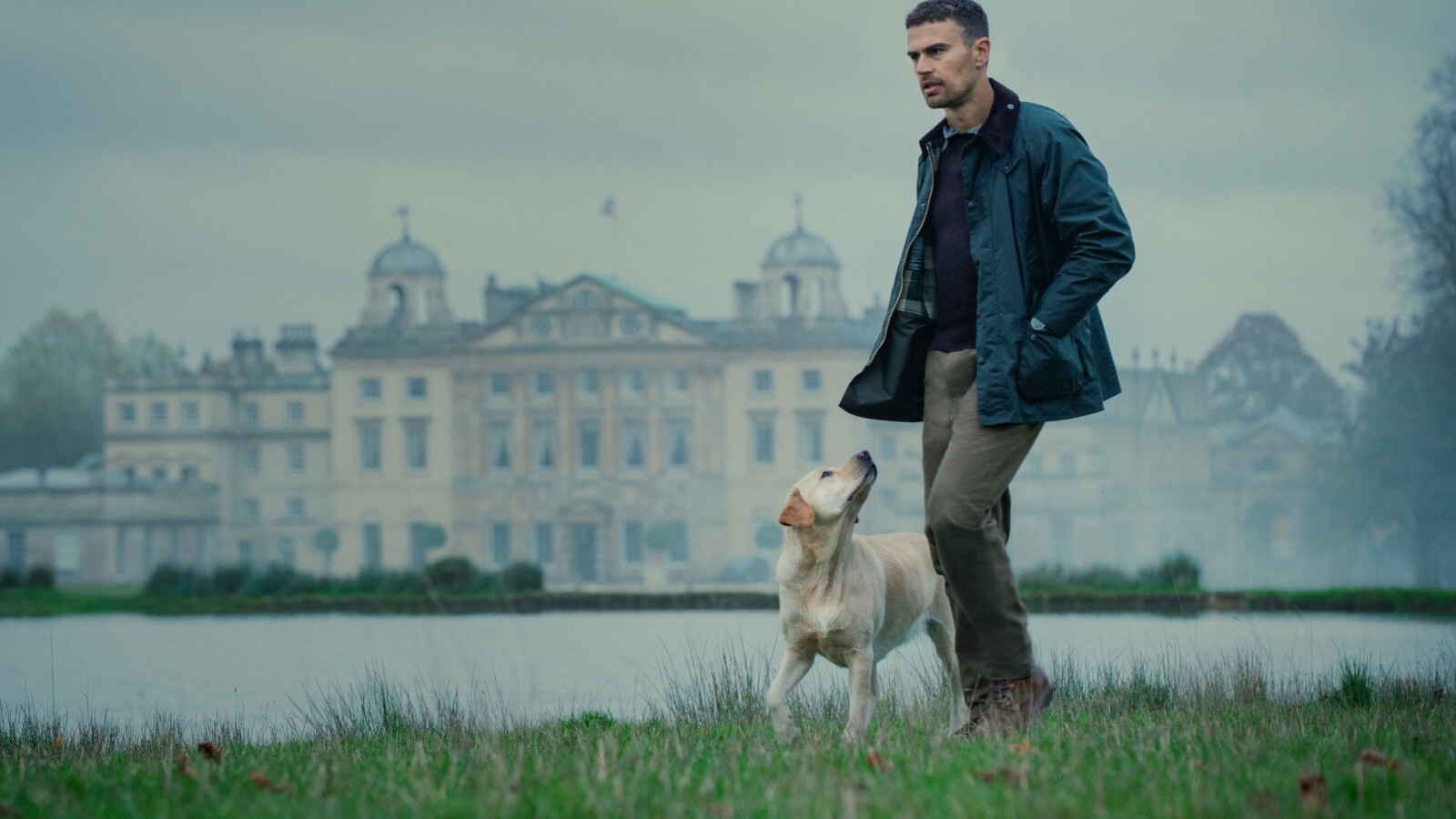
In The Gentlemen Eddie Horniman gets called back to England because his father is dying. After his death, Eddie inherits the family estate as well as the title of Duke instead of his irresponsible older brother. The same older brother owes a large sum of money (although, 8 million would be peanuts to anyone in Succession) to a drug dealer and when he causes even more trouble, Eddie is forced to join forces with a cannabis producer who grows her product under his estate. 

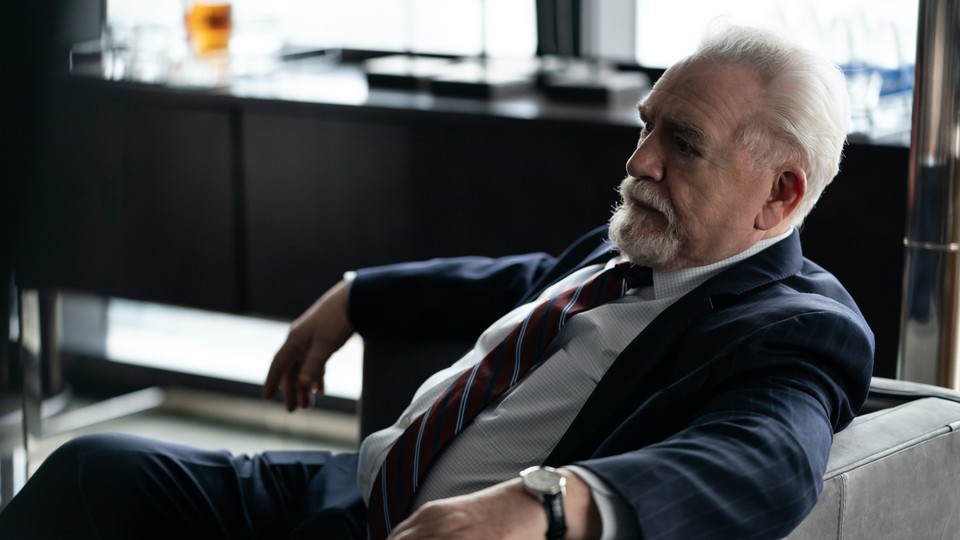
When in Succession, the patriarch of the Roy family and CEO of a media and entertainment conglomerate, Logan Roy, suffers a stroke, the struggle for the control of the company begins and the characters start to destroy themselves and each other for the money and the power that would bring.


Succession is (despite what some other very wrong people might claim) a scathing critique of capitalism and the people propagating it, specifically the America-brand of hyper-capitalism that sucks everyone participating in it in until there's nothing left. Almost every single one of the characters is awful in one way or another, they cannot escape the draw of their abusive family dynamics that mirror the abusive dynamics of the capitalist system. It is a drama with dark comedic elements.

In The Gentlemen meanwhile you are supposed to think the two main characters are cool and badass. You are supposed to root for them and they are, through narrative decisions, mostly in the right in their actions.  It's also not about capitalism at all really. It's not presenting capitalism and the people participating in it in a positive light, it's only concerned about money as a means to an end not and end in itself. The Gentlemen is about keeping your family safe with the cleanest hands possible. It's about the allure of a criminial underbelly and how far you are willing to go. It is an action comedy. 


The specific point the post was belaboring had to do with the - excellent - choice of Succession not to have an employee character who works for the Roys and is loyally supportive of them, while The Gentlemen has a gamekeeper that looks after the Horniman estate and is devotedly on their side throughout. Again, it is useless to compare the two because the context is different. On the one hand, the gamekeeper lives on the estate, he's personally invested and connected to the family, and a trusty butler/housekeeper/groundskeeper is a staple in stories about the British nobles; on the other hand everyone in Succession works for the company - some long-standing, some not - and while they also are in part involved with the family, they, as well, are shown to prioritize their own self-interest as is fitting for the thematic through-lines of the show. 

Therefore, while it is utterly fair to not want to watch or else not enjoy watching a show that - at least in part - looks at criminal enterprises or British aristocracy with kind eyes, you do have to acknowledge that it has very little in common with the withering insights into US-American capitalism of Succession.   

In the end, it's like saying "Game of Thrones is Lord of the Rings if it was bad". Those two things aren't the same. 


 Edit: The specific post crossed my dash again and thus reminded me that OP called The Gentlemen "one of those Eat the Rich shows". And that's just simply not true. As I have elaborated up above, you, the viewer, are meant to empathize with the main characters here, you are meant to want them to make money. They are meant to come off as cool and likable. What are you on OP? 

Sunday, January 26, 2025

Favorite Quotes of 2024

As another collection from the novels I read last year, I present to you some of my favorite quotes. They are my favorite either because they express something in beautiful language, are profound in context or stuck with me throughout.

Enjoy!

 "I remember this: the way she stood and looked at me, half raised her arms and then dropped them as though uncertain of her welcome, and the way I ran towards her anyway, the bright reality of her, and felt such wide white blinding love and relief that all other memories from that day disappeared." - Our Wives Under the Sea, Julia Armfield

"My body is a world full of tectonic inhalation and exhalation, volcanic heartbeats, oceans of blood, electrical storms of nerve endings. And my mind is that world's chief city." - The Odyssey Problem, Chris Willrich in The Best American Science Fiction and Fantasy 2023

"... and you breathe in memory. The weight and mortality and the sensible shoes are just costume, falling away, and your real selves rise up, briefly, dancing rosy and naked, in the middle of the subway car." - White Houses, Amy Bloom

"Run isn't quite accurate. Their legs don't move. Their still-twitching feet don't touch the ground." - The Penelopiad, Margaret Atwood

"I like to think of my brain like that, tangled up in my skull. The idea that my brains could be untangled, straightened out and thus refashioned into a state of peace and sanity was a comforting fantasy. I often felt there was something wired weird in my brain, a problem so complicated only a lobotomy could solve it - I'd need a whole new mind or a whole new life." - Eileen, Otessa Moshfegh

"Amber gazes at me. Her eyes are the same waxy green color as the mile marker. 'You're my house, Del.'" - A Bird Sings by the Etching Tree, Nicole D. Sconiers in Out There Screaming

"But here it is, now, and here I am, too. And this train - very real, very concrete and travelling fast - is tearing us together. Close your eyes." - Assembly, Natasha Brown

"I turn back to survey the view. Even up here, I feel it against my skin, the thumping nationalism of this place. I am the stretched-taut membrane of a drum against which their identity beats. I cannot escape its rhythm. Everything awaits Monday - New York, then back in the office. For the rest of my life these Mondays loom loud, thudding and crashing, crescendoing on to me, tearing through -" - Assembly, Natasha Brown

"I remained leaning on the window, with a thirsty longing to plunge myself into the blue-moon mist, this dew and perfume and silence, which seemed to vibrate and quiver like the stars that strewed the depths of heaven." - A Wicked Voice, Vernon Lee, in Weird Fiction: An Anthology

Thursday, January 2, 2025

Top 4 novels I did not like that much

I don't want to be so mean on my blog and generally I have positive things to say about the novels I read since I know that just because something wasn't for me, does not mean it isn't for anyone or that it lacks in quality at all.

So, without further ado, here are the 4 novels that I read this year that did for some reason or other did not connect with me.

1. Greenwood - Micheal Christie

Cover of the novel Greenwood by Michael Christie.


In a desolate future a woman works in one of the very last forests on earth. When she finds out a forgotten bit about her family's past, the reader takes a journey through family history, step by step from 2038 all the way to 1908, before traveling back to 2038, stopping at the same stations.

The concept is innovative, I'll give the novel that. Also it's beautifully written and touches on worthwhile issues. It's just that from the summary and quotes I assumed it would be hopeful (and I believe that was the author's intent, too) but by god did it feel extremely depressing to me. Almost all the characters lived miserable lonely lives and died miserable lonely deaths, which apparently await us all as the first trees in the last forest, too, become infected. 

2. Dust - Hugh Howey 

Cover of the novel Dust by Hugh Howey.


Dust is the third and final installment in the Silo trilogy, which now has a TV adaptation. In a post apocalyptic future what is left of humanity lives in Silos underground. Over the course of the trilogy the truths the Silo head tells the population are put into question and a rebellion is formed that works to uncover what was kept hidden. In this last novel, the characters must reckon with the lies they were told and find a way forward when their tentative peace is destroyed.

At this point I was just so bored by everything being so very bad all the time. For example, a child character is all but kidnapped and forced into child marriage for a chapter before she escapes. It took me all the way out of the story. I do think the ending is beautiful, though.

3. The Penelopiad - Margaret Atwood

Cover of the novel The Penelopiad by Margaret Atwood.


Down in Hades, Penelope tells her story. From being chosen as a consolation price over her experiences during the Trojan war and after. 

I usually enjoy these types of perspective shifts, ancient Greek story telling, and Margaret Atwood, but little elements in the way this shift is executed bothered me. The way Helen was portrayed in particular rubbed me the wrong way. I understand that Penelope is an unreliable narrator, trying to position herself as the protagonist of the story, but still, Helen as this manipulative cruel being who causes destruction for the fun of it felt not good to read.

I do like the regular interludes of the maids in different poetic styles, who are killed at the end of the story. Giving those who are not only sidelined but condemned a voice and a humanity is interesting to me.

4. All That's Left in the World - Erik J. Brown

Cover of All That's Left in the World by Erik J. Brown.


In this novel two boys, who lost everyone once dear to them, have to navigate a post apocalyptic society, find safety, find themselves, and find each other.

While I had actual criticisms about the other novels on this list, this one only did not hit me as I thought it would. Likely, I am simply too old for this, as it is a YA story. I truly did like the development of the boys' relationship and their different perspectives on the apocalypse.

Monday, December 30, 2024

Top 5 novels of the year

 Last year I gave you a rundown of all the novels I read that year. This year, however, I read 30 novels and have therefore decided to instead tell you about the five best novels I read this year and maybe about the five I liked the least.

1. Our Wives Under the Sea - Julia Armfield

Cover of the novel Our Wives Under the Sea by Julia Armfield. The cover shows a woman's face the top half of it is obscured by dripping water.


A beautifully tragic love story in retrospect, Our Wives Under the Sea tells of a woman whose wife returns home after being lost on a deep sea mission for 6 months, as well as the wife's experience on the ocean floor. While lost, whatever Leah found in the darkness and deep, left her forever changed. Miri has to adapt to the new status quo and find that the process of grieving for the woman that embarked on her journey 6 months ago is far from over. 

The novel is an elegy that can be read both as an allegory for terminal illness as well as a tale about the transformative nature of the ocean and how despite it all, the love we have for each other is all that counts. It is also just so gorgeously written with lyrical phrasing centering the emotions of the two women.

2. Convenience Store Woman - Sayaka Murata

Cover of the novel Convenience Store Woman by Sayaka Murata. The cover is light purple and shows a plastic fish packaging of soy sauce.


Keiko Furukura is 36 years old, single and works in a convenience store in Tokyo. She is, by all accounts, content with her life and feels fulfilled in the minutiae of her job. Everyone around her, however, insists that there is something wrong with how she chooses to live her life, her coworkers, her friends, her family, and Keiko feels the omnipresent pressure to try and mold herself into a form they might accept. 

When I read the novel I felt so charmed by the poetic description of the daily routine in the store (credit, too, here to Sayaka Murata's English translator Ginny Tapley Takemori) communicating so clearly that Keiko felt at peace there, a cog in a well-oiled machine, part of something bigger that matters to people. I also found myself deeply relating to her - ultimately fruitless - attempt to fit into what society expects of her and rejoicing at her realizing that above all she needs to stay true to herself. 

3. A Psalm for the Wild-Built - Becky Chambers

Cover of the novel A Psalm for the Wild-Built by Becky Chambers. The cover shows a drawn road through lush plants. On the road is a monk sitting on a carriage and further up a robot.


It is not surprising that a Becky Chambers novel would land on my top 5; she is, after all, one of my favorite authors. This novel is a meditation on themes of purpose and usefulness and identity. In a solar punk future that came centuries after a destructive industrial age which ended when the newly sentient robots left humanity to walk into the wilderness of the moon they live on, a monk called Dex in search of the meaning of life leaves the outskirts of civilization and becomes the first to run into a robot. 

The novel  is beautiful, soft and gentle. Just like Dex helps people with teas and lending an ear, this novel takes your hand through feelings of purposelessness and inadequacy. As in her Wayfarer series, the worldbuilding here is intricate and gives us a glimpse into a possible world where humanity lives in tandem with nature and hope is thriving.

4. Gingerbread - Helen Oyeyemi 

Cover of the novel Gingerbread by Helen Oyeyemi. The cover shows a crow holding a branch with an organe in front of a pastel orange wall.


This was one of the last novels I read this year and I adored it. A woman is forced to confront her past when her daughter almost dies. She has to grapple with her childhood in a country that for all intents and purposes does not exist and her relationships to her mother and the family responsible for her leaving the country of her birth. 

I was immediately drawn in by the dreamy prose that gives the world, especially the non-existent country but also the present in England, a fairytale feel, with all the whimsy and uncanniness that implies. Harriet and her struggles, anxieties, hopes and dreams, felt solid and real to me and I loved exploring what made her who she is in themes of belonging, legacy and origin.

5. Assembly - Natasha Brown

Cover of the novel Assembly by Natasha Brown. The cover shows a country estate colored in blues.


The narrator of this tour de force of a novel is an ostensibly successful Black British woman. She has made it in a predominantly white patriarchal corporate world. A promotion is on the horizon and her rich white boyfriend just invited her to  family garden party. As she preaches to young girls that they, too, can get where she is, she feels her world to be a constant struggle and her 'dream' a lie, the success nothing more than a cage society's systems keep her in. When she receives a life-changing medical diagnosis, her inner turmoil reaches a breaking point.

The visceral and inventive writing style does not sugarcoat exactly how trapped the narrator feels and makes the reader feel with her. The issues discussed - racism, sexism, classism and sexual harassment -  are portrayed so real and inescapable, you understand how she comes to the decision she makes in the end.

Friday, November 1, 2024

Some of my favorite horror media 1


 I always used to say I don't like horror as a genre. That is not quite true, or it is not quite true anymore. Horror is such a varied genre with a multitude of utterly different subgenres that it is hard to decry the genre as a whole. And while it is true that still there are horror stories or subgenres I generally do not enjoy and would not usually seek out (slasher horror in most cases, anything revolving around torture, for example), there are also many horror stories I do like greatly, that affect me and that I connect to. So for this Halloween I decided to recommend to you some of my favorite horror media. 

Hard mode, I cannot recommend anything I have recommended before which tragically eliminates one of my absolute favorite horror short stories Brian Evenson's Smear. Check the recommendation tag for those. 

Let's start off with a simple definition. According to the Encyclopaedia Britannica a horror story is "a story in which the focus is on creating a feeling of fear". The Encyclopaedia stresses the genres roots in folk tales and as such it is a genre as old as storytelling itself. Ever since there were people weaving tales for each other, they were telling scary stories intended to frighten. And so I, too, like to be disturbed.

I'll give you five for this year. 

 Shirley Jackson's novel The Haunting of Hill House (not to be confused with the show with the same name) is to me a quintessential haunted house tale. A researcher invites guests into a mansion to study their reactions to the buildings supposed haunting. One of the guests, Eleanor, who takes care of her sick mother and lives a withdrawn life, sees more of the haunting than the others do and begins to be drawn into the house and its ghostly effects. The main selling point to me is the entwining of the characters' psyches with the haunting itself. It's not just ghosts - it's your loneliness and your grief and your trauma. Fantastic example of the genre I like to call 'the house is only haunted because you are'.

I've watched the TV show Midnight Mass because I do love vampires and everything to do with them. It's got a great atmosphere of slow and creeping unease and a - to me - fresh take on the vampire mythos. The beloved priest of a small and isolated island town returns from a pilgrimage transformed into his young and healthy self. This is not, however, the only transformation. I greatly enjoyed how the priest recontextualizes his vampiric transformation into something pure and divine and how he convinces (almost) everyone around him so he may hold onto his belief. The vampire here is grief and an inability to let go and the destructive powers those hold.


Jeff Vandermeer's novel Annihilation (not to be confused with the movie of the same name) hit me so deeply that I found the movie - although it is brilliant - and its changes hard to stomach. I have since made my peace with the movie on its own merits but still hold the novel dear. A woman sets out to research a mostly unknown area where her husband formerly disappeared and later mysteriously reappeared. As soon as she and her companions enter, the boundaries between what is real and not as well as between her and the area begin to blur. I adore the protagonist's gradual loss of identity as well as a connection to the theme of alienation. This novel may have been the start of my appreciation of leaving the audience guessing, of not explaining and the unknown.

I found  Which Super Little Dead Girl (TM) Are You? Take Our Quiz and Find Out! by Nino Cipri in a Best American Science Fiction and Fantasy collection. It's short horror fiction in the form of a personality quiz. You can find out which Super Little Dead Girl TM, a group of heroic dead girls, you are. During the quiz you find out about the girls and their gruesome and tragic deaths. Apart from the unusual storytelling style I love the unsettling answers that hint at the reality of the girls.


Maybe it's cheating to recommend a Magnus Archives episode because I have written about it. But that wasn't technically a recommendation, so: "Killing Floor". In the story Jonathan Sims, the archivist of an institution collecting spooky stories, reads out the story of a man who works on the killing floor of a meat processing plant. The horror here is both about consumption and flesh as well as the inescapable nature of the meat grinder that is having a job under capitalism. Extremely unsettling to me.


About Me

My photo
I am in my early 30s and finished my university career. My areas of study included media analysis, literary and cultural studies, linguistics, and history. I like reading, drawing, writing, movies, TV, friends, traveling, dancing and all kinds of small things that make me happy. Just trying to spread some love.

Favorite quotes of 2025

This year, before I give you my rundown of best books read in 2025, I give you my favorite quotes in no particular order. These are just a s...